
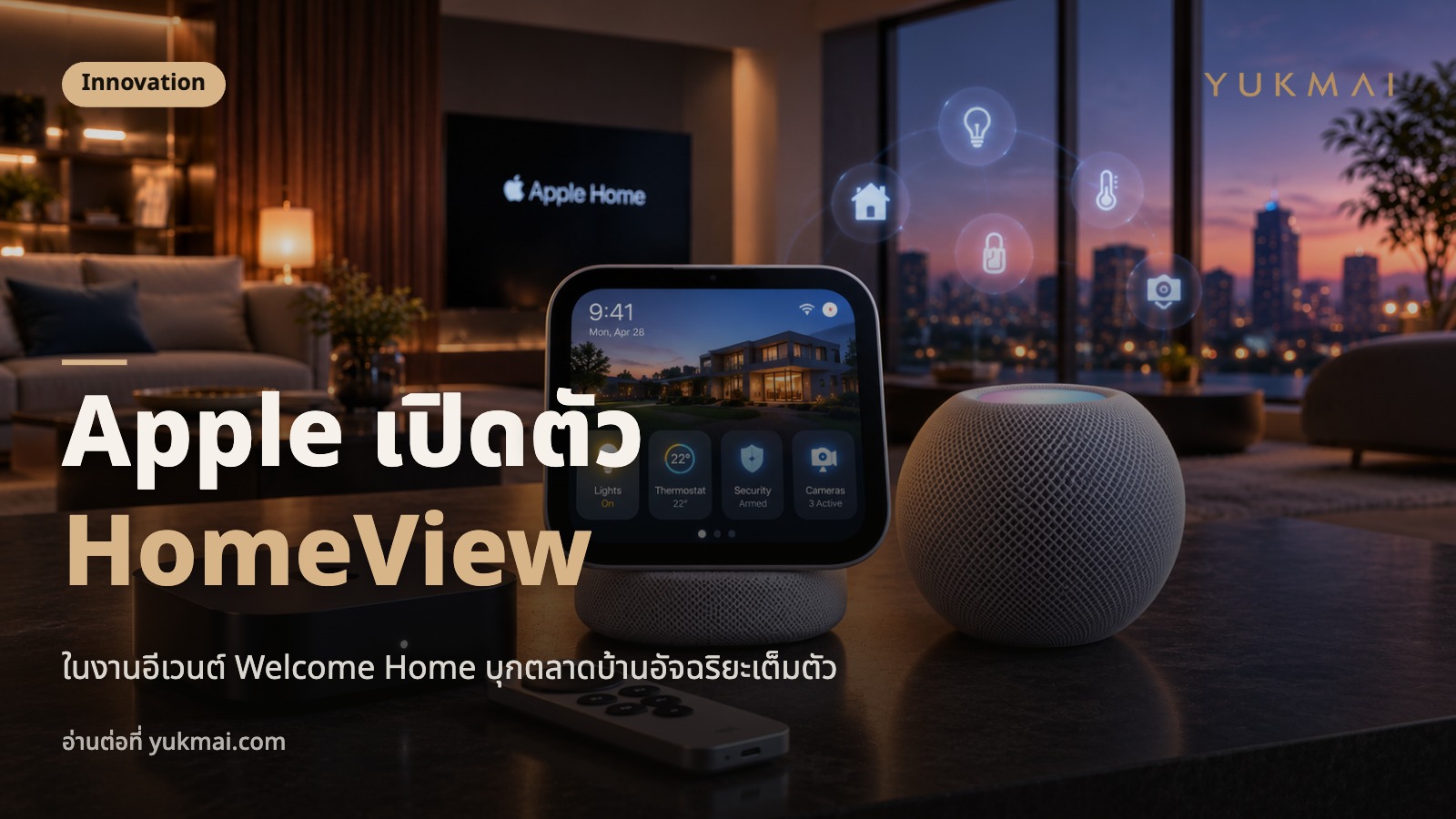
After more than a decade of trying without much success, Apple is making a serious new push into the smart home. On Tuesday, Oct. 13, 2026, it launched a new lineup under the "Welcome Home" theme, led by the HomeView smart home display, alongside a new Apple TV 4K and HomePod mini and a set of accessories developed with LG. Notably, Apple skipped a traditional keynote, announcing the products through press releases while inviting select media to a hands-on "Apple Experience" in Tribeca, New York. The whole launch is a bet that an AI-upgraded Siri can help Apple win share in a market long dominated by Amazon and Google.
Not a Keynote but an "Experience": Apple Changes How It Launches
Apple teased the date on Oct. 8 through a post from marketing chief Greg Joswiak with the tagline "Welcome home," while some media members were invited to an Apple Experience on the morning of Oct. 13. The format differed sharply from September's iPhone event: there was no keynote livestream, and media instead tried the products in a setting designed to feel like daily life at home. The approach fits the products, which are best understood in use around the house rather than as specs on a stage.
HomeView: A 7-Inch Display That Knows Six Faces
The star of the launch is HomeView, a new device that sits somewhere between an iPad and a HomePod. It has a 7-inch square display, an A18 chip and a 12MP camera. Its key feature is face recognition for up to six people, each with their own Home Screen, apps and widgets, while shared content such as family photo albums and music remains available to everyone. HomeView comes in two versions at the same $299 price: a tabletop model with a domed speaker base in four colors, and a wall-mounted model in two colors that requires a separately sold Schneider Home mount starting at $59.95 and lacks the tabletop version's woofer. Pre-orders opened on Oct. 13, with shipments starting Nov. 13. Other features include a smart home control face, live viewing of up to nine camera feeds at once, FaceTime, and step-by-step recipes for the kitchen.
Apple TV 4K and HomePod mini 2: Upgraded for Siri AI
Apple also refreshed two existing products. The fourth-generation Apple TV 4K gets a faster A19 chip, microphones for Siri, more storage and Wi-Fi 7, while the $149 HomePod mini 2 gets a faster chip and new colors. All three devices support Siri AI. However, Reuters noted the new Apple TV 4K costs more than double its predecessor, while streaming boxes from Amazon, Google and Roku cost $200 or less.
Teaming Up With LG and Schneider: A Rare Partnership Play
The most unusual part of the launch is the Apple Home Collection, accessories co-developed with LG and Schneider Electric: indoor, outdoor and floodlight cameras, a video doorbell, a smart lock, thermostats and a temperature sensor. Although co-developed, the products carry the LG brand, with LG handling manufacturing and product support. Prices range from $39.95 for the temperature sensor to $399.95 for the floodlight camera, with the video doorbell at $249.95 and the smart deadbolt, which uses UWB to unlock automatically as its owner approaches, at $349.95. Sales begin in the US and Canada in December, with some products following early next year. Apple says camera footage and Home app data are never made available to LG, Schneider Electric or Apple itself. The partnership builds on a long relationship, including LG Display supplying Apple screens and the UltraFine monitors the two developed together. For LG, it is a rare expansion into security and climate-control devices.
The Catch: A High Price, No EU or Thailand Launch, and Siri AI Still in Beta
HomeView has clear limitations. At $299, it costs much more than Amazon's Echo Show 8 at $199.99 and Google's Nest Hub at $99.99. It will not be sold in the European Union because Siri AI is unavailable in iOS there, and the first wave covers only select markets such as the US, UK, Canada, Australia, India and Singapore, not Thailand. Siri AI on HomeView is a beta, English-only at launch, with daily limits on features that rely on server-side models and expanded access promised "for a fee in the future," while personal-context answers require a nearby Apple Intelligence-capable iPhone or iPad.
A Tough Arena: Apple Still Trails in the Smart Home
This is a market where Apple has long lagged. According to Consumer Intelligence Research Partners (CIRP), for the 12 months ending in June, most US smart speaker owners had an Amazon device, about a quarter had Google, and only about 7% had Apple, a share that has stayed in the mid-single digits for years. CIRP's analysts suggest Apple may target people without a smart speaker rather than try to convert Amazon and Google customers. Timing may help, though: Amazon and Google have only just begun refreshing hardware for Alexa+ and Gemini, leaving the upgrade cycle wide open. Apple shares rose 1.6% in early trading on launch day.
Marketing Lessons: Sell the Feeling Before the Specs
For marketers, the launch offers three lessons. First, calling the event "Welcome Home" and branding it an "Experience" instead of a "keynote" shows Apple selling warmth and the privacy of home rather than hardware specs; the name and tone of a launch can shape perception almost as much as the product itself, especially for products that live in customers' private spaces. Second, Apple expanded its ecosystem through partnership rather than building everything in-house, letting LG manufacture, brand and support the accessories, reducing risk and speeding time to market while Apple keeps control of the experience through software. Third, Apple turned privacy into a selling point, with on-device processing and a promise that partners cannot see camera footage, directly addressing consumers' biggest worry about cameras at home.
What It Means for Investors: A Long-Term Bet on Siri AI
Financially, smart home products remain a tiny part of Apple's business compared with the iPhone, so investors should look beyond near-term HomeView sales to whether Siri AI can compete with Alexa+ and Gemini. Analysts remain unsure whether Siri, upgraded this summer with help from Google, is good enough to win consumers in a crowded market. There is also a services angle: if Apple eventually charges for expanded Siri AI access as it has signaled, and ties camera features to iCloud+, the smart home could become another recurring revenue stream. Key things to watch are orders after the Nov. 13 launch, expansion to more countries including Thailand, and progress on bringing Siri AI to Europe.