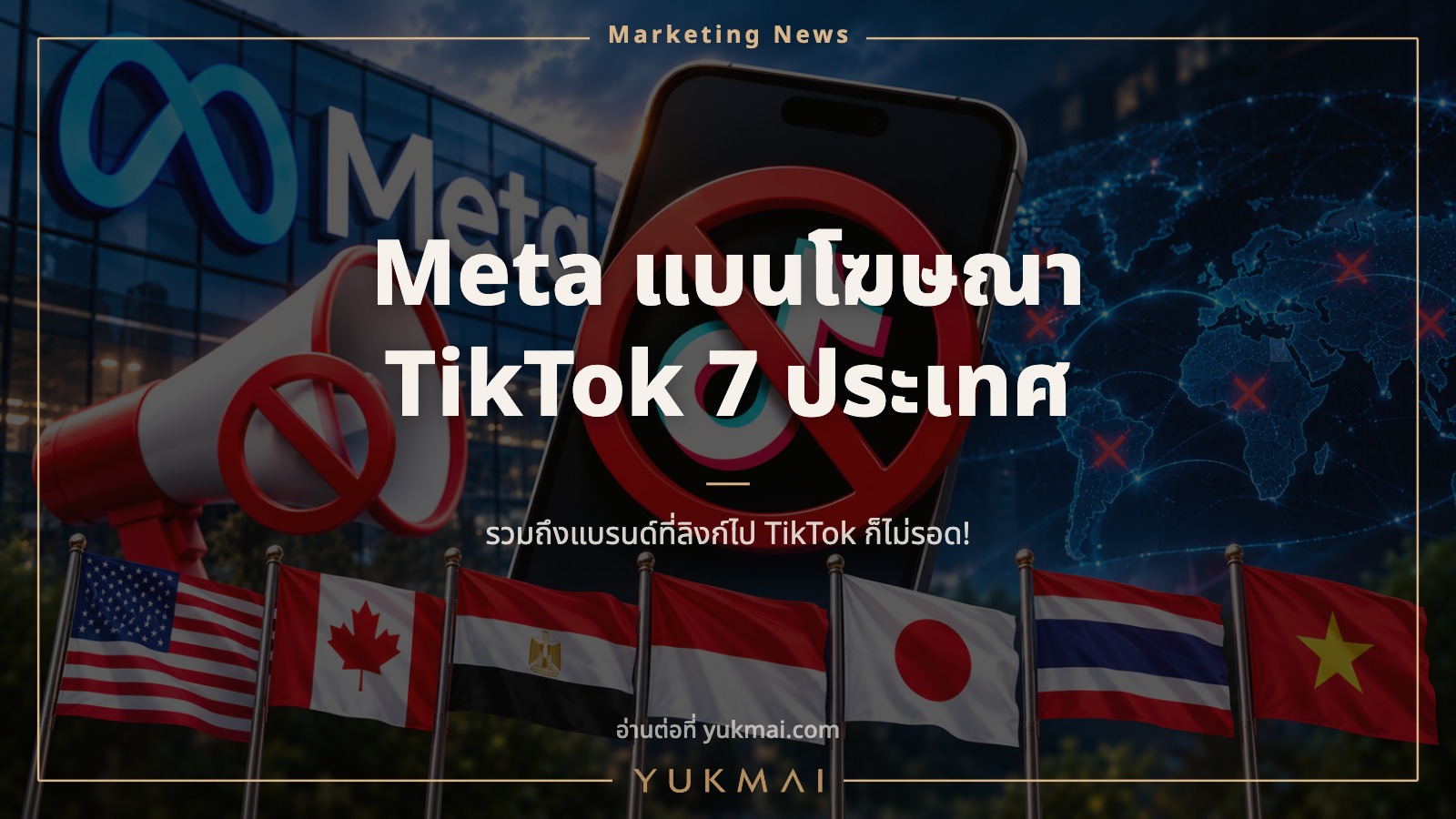
The rivalry between two social media giants has opened a new front. Meta, the owner of Facebook and Instagram, has started barring ByteDance, TikTok's parent company, from advertising on its platforms in seven countries, including Thailand. The restriction took effect immediately on Thursday, Oct. 8, 2026, US time, and it is not limited to ads bought by ByteDance itself. It also covers brands and other advertisers running campaigns that send users to TikTok or other ByteDance services. For Thai marketers who use Meta ads to drive sales on TikTok Shop or traffic to TikTok content, this is a change that requires an immediate campaign review, because Meta has not yet published detailed enforcement guidance.
Meta Bans ByteDance Ads in 7 Countries, Including Thailand
According to Bloomberg, citing Meta, the company has begun a "complete restriction" on all ads and paid marketing messages placed by ByteDance on Meta's platforms in seven countries: the United States, Canada, Egypt, Indonesia, Japan, Thailand and Vietnam. Meta spokesperson Chris Sgro said the company does not have to run ads from a competitor whose goal is to pull people off its apps, calling the refusal to provide promotional services to a rival a normal business practice across industries, and adding that Meta will continue to compete on product quality and user experience. Meta has not said whether it will extend the restriction to other countries, and TikTok and ByteDance have not responded publicly.
Not Just TikTok: Brands Linking to TikTok Are Covered Too
The most important point for marketers is that the ban looks at an ad's destination, not just at who placed it. That means brands with no corporate ties to ByteDance could be affected if their Facebook or Instagram campaigns send users to TikTok or other ByteDance services, such as the CapCut video editor or the Lemon8 lifestyle app, in the affected markets. However, Meta has not published clear enforcement guidance, and it has not been confirmed whether ads linking to TikTok accounts or TikTok Shop listings are covered. Under Meta's advertising standards, review extends to an ad's landing page and other destinations, and violations can lead to ad rejection and restrictions on a business account. Ordinary unpaid posts are not affected, and users in these countries can still use TikTok normally, since this is an advertising restriction rather than an app block.
The Trigger: A Link War and a Child-Safety Feud
The ban follows a series of escalating moves since mid-year. In August, Meta agreed to pay about $18 billion to settle claims by US states over harms to children, accepting daily time limits and nighttime limits for young users, with part of the payout tied to rivals adopting similar measures. Meta then pressed TikTok and YouTube to follow suit, running ads in major newspapers and criticizing TikTok for skipping a US government meeting on screen time. In September, TikTok rejected Meta ads calling on it to join those commitments, citing its rules on political content, and removed dedicated Instagram links from user profiles, making it harder for users to move from TikTok to rival platforms. Meta also sees an uneven playing field: TikTok operates freely in the US, Meta's most important market, while Meta cannot operate in China. TikTok's US business now runs through a majority American-owned joint venture in which ByteDance holds 19.9%.
What Thai Marketers Should Do Now
For brands and marketers in Thailand that run Meta ads alongside TikTok, the first step is to export all live ads and check every destination URL and landing page for links to TikTok, TikTok Shop, CapCut or Lemon8, prioritizing campaigns delivering to Thailand, Indonesia and Vietnam, the region's key e-commerce markets. Advertisers should then redirect those campaigns to owned channels, such as their website, LINE Official Account or other marketplace stores, to reduce the risk of ad rejection or account restrictions. Creators and brands that used Facebook or Instagram ads to grow TikTok followers will need to switch to advertising inside TikTok instead. Longer term, the episode signals that major platforms are building clearer walls between their ecosystems, making strategies that bring customers back to brand-owned channels more important than ever.
What It Means for Investors: Meta Gives Up a Little Revenue to Block a Rival
For investors, turning away ad money from a major rival could cost Meta some revenue, but there is no public data on how much ByteDance spent on Meta's platforms, and that spending could be replaced by other advertisers in Meta's auction. What Meta gains is cutting off a channel TikTok used to acquire new users through Meta's massive ad network in key markets, including Southeast Asia's fast-growing e-commerce markets. TikTok loses one promotional route but can still acquire users through other channels, so the impact on its growth remains unclear. Key things to watch are whether TikTok retaliates by restricting Meta's ads on its own platform, whether the ban expands to more countries, and whether competition regulators step in.