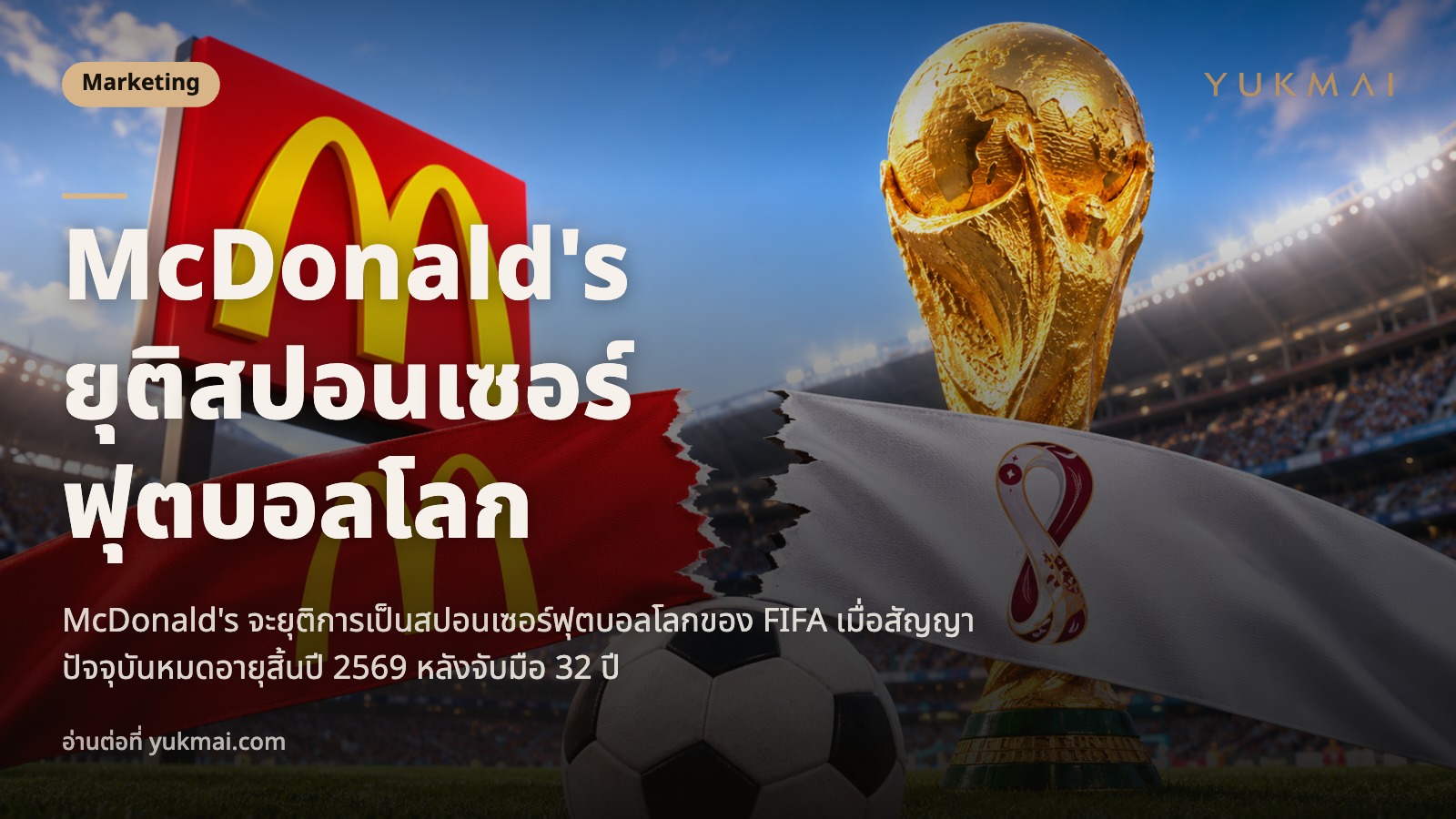
One of the world's longest-running sports sponsorships is coming to an end. McDonald's, the world's largest fast-food chain, will not renew its FIFA World Cup sponsorship when its current agreement expires at the end of 2026, closing a 32-year relationship that began with the 1994 World Cup in the United States. Adweek first reported the news, and FIFA has confirmed the current agreement will end as scheduled. The decision comes just months after the 2026 World Cup, co-hosted by the US, Canada and Mexico, and raises a big question in marketing circles: is spending heavily on global sporting events still worth it?
From 1994 to 2026: 32 Years on the World Cup Stage
The partnership began in 1994, when the US hosted the World Cup for the first time, and ends in the year the US returned as a co-host. Over 32 years, McDonald's gained marketing rights across FIFA competitions, including stadium branding and naming rights to the Fair Play Trophy. The latest deal, announced in May 2023, covered both the 2023 Women's World Cup and the 2026 World Cup. This is not the first time McDonald's has stepped away from a global sporting event: in 2017, it ended its Olympic sponsorship after more than 40 years.
The Biggest Campaign, but Results Fell Short
Notably, McDonald's had just gone all in on the 2026 World Cup. It was the brand's largest-ever World Cup campaign, created with Wieden+Kennedy New York and rolled out across more than 110 countries, and the company called it its biggest marketing initiative of the year. The campaign included a FIFA World Cup Meal, special Happy Meals and collectible cups featuring stars such as David Beckham, Ronaldinho, Thierry Henry, Son Heung-min and Lamine Yamal. But on the company's second-quarter 2026 earnings call, CFO Ian Borden said that while the campaign provided a lift to the business and generated excellent system excitement, it underperformed versus expectations. This came as McDonald's growth in the US was slowing, putting every marketing dollar under closer scrutiny for its business impact.
Why Exit: From "Borrowing Fame" to "Building Its Own"
The main reason reported is that McDonald's is reworking its marketing strategy to focus on building its own brand properties and intellectual property rather than relying on external events. It will place more weight on brand assets, creator collaborations and initiatives that drive direct customer engagement. The logic is that sponsoring a mega-event means "renting" another property's fame once every four years, while owned IP, whether characters, menu items or recurring campaigns, is something the brand controls and can build value in over time. McDonald's has also clarified that the decision is unrelated to recent controversies surrounding FIFA and that it will continue to invest in sport through other partnerships.
What Nobody Knows: The Fee and the Real Return
Despite admitting the campaign fell short, McDonald's has never disclosed its FIFA sponsorship fee, total 2026 campaign spending, customer acquisition costs, campaign-specific incremental sales or a precise return on investment, so analysts can only infer from outside signals. For FIFA, losing such a long-standing major sponsor is significant, but Sportcal noted the relationship has long drawn criticism from those who would prefer healthier food be promoted, and McDonald's seemingly voluntary exit may let FIFA find a food partner that better fits a health image.
Lessons for Marketers
The case offers several lessons. First, scale does not guarantee results: even a brand's biggest campaign at a globally watched event can miss its targets. Second, measurement matters more than visibility: as executives demand proof of sales impact, paying to put a logo in a stadium may no longer be enough. Third, weigh borrowing against building: event sponsorship delivers instant fame but must be paid for every cycle, while owned IP takes longer to build but never expires. Finally, brand fit matters: food and drink brands tied to sport constantly face health questions, a hidden cost that does not show up in the numbers.
What to Watch
Three things are worth watching. First, where McDonald's redirects the budget it used to spend on FIFA, and what its owned IP campaigns will look like. Second, who replaces McDonald's in FIFA's food category ahead of the 2030 World Cup. Third, whether other major brands follow suit: if top sponsors start questioning the value of mega sporting events in the same way, the price and structure of global sponsorships could change.