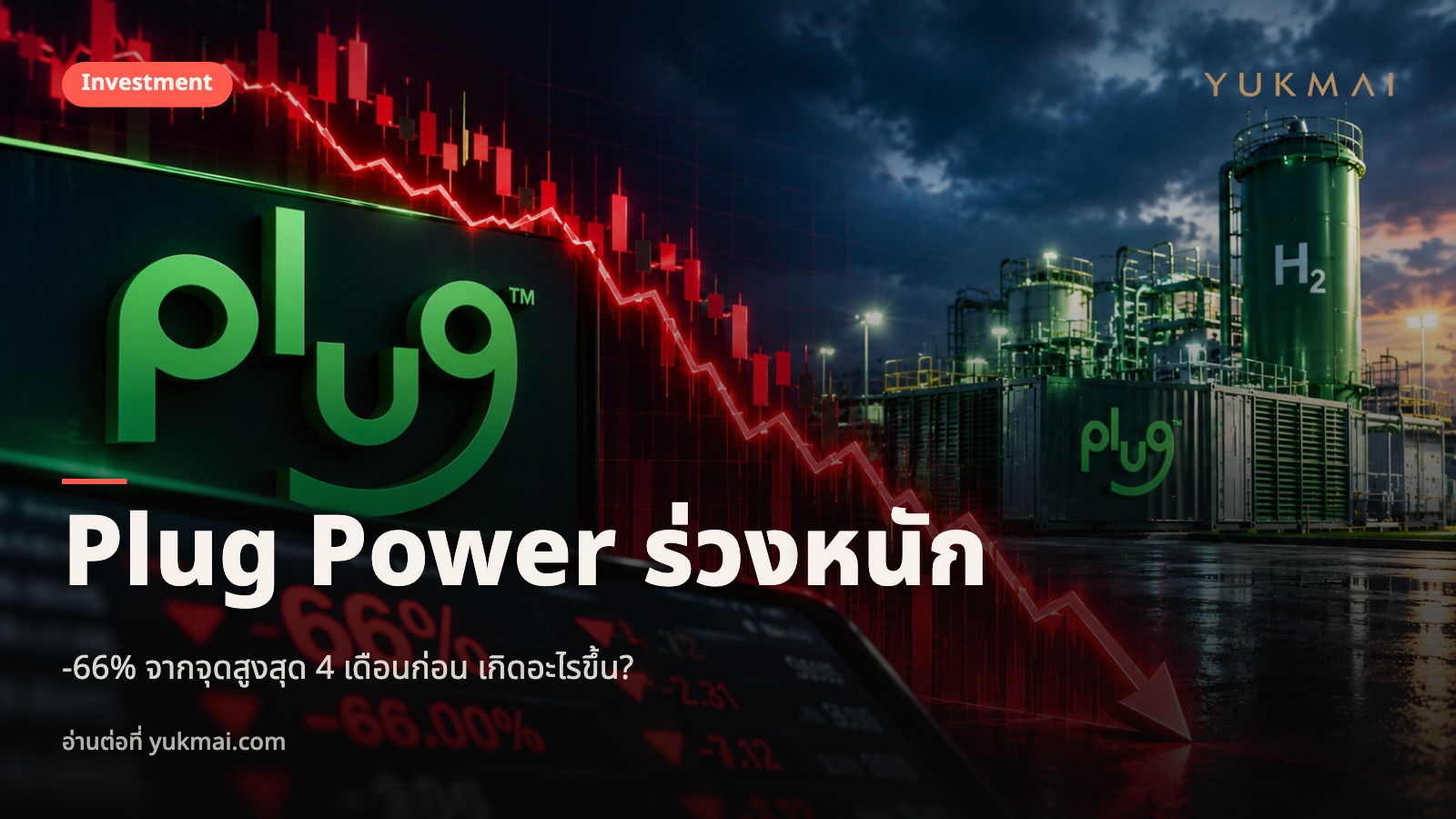
Back in June, Plug Power was one of the hottest stocks of 2026. Shares had nearly doubled since the start of the year, analysts were raising price targets, and the turnaround story of a hydrogen company that had lost money for 25 years finally seemed to be coming true. Just four months later, PLUG closed at $1.45 on Oct. 14, 2026, down 7% on the day, about 66% below its 52-week high of $4.33, and lower for an eighth straight session. What makes the slide striking is that Plug Power's business actually improved in several ways over the same period. This article walks through what happened, and why better numbers have not been enough to stop the selling.
Understanding Plug Power's Business: An End-to-End Hydrogen Supply Chain
Before looking at why the stock fell, it helps to understand what Plug Power does. The company positions itself as the builder of a "fully integrated hydrogen ecosystem" spanning production, storage, delivery and power generation. Its supply chain has four stages. First is hydrogen production: Plug makes GenEco PEM electrolyzers, which split water using electricity, selling them to green hydrogen projects worldwide, such as Galp's refinery in Portugal and Iberdrola in Spain, and using them in its own liquid hydrogen plants in Georgia, Tennessee and Louisiana, with combined capacity of about 40 tons per day; the Louisiana plant is run through a joint venture with Olin. Second is liquefaction, storage and delivery using cryogenic tanks and trailers. Third is fueling stations installed at customer warehouses. The final stage is end use, where the core business is GenDrive fuel cells for warehouse forklifts, with more than 76,000 systems deployed across 280-plus sites for major customers including Walmart, Amazon, Home Depot, BMW and BP. Revenue therefore comes from several streams: equipment sales, services, and recurring hydrogen fuel sales to its installed base.
The problem is that this integrated model requires heavy investment at every stage of the supply chain, from plants and equipment to delivery networks, which is a key reason for years of cash burn. In the past, Plug bought hydrogen from outside suppliers and resold it to customers below cost, so producing its own fuel is central to fixing margins. Risks remain: the company itself warns in SEC filings that its business could suffer if it cannot secure enough hydrogen at competitive prices, its electrolyzer components come from several continents and are exposed to tariffs and supply chain disruptions, and revenue still relies on a small number of large customers.
From First-Half Star to a One-Year Low
The first half of the year brought a steady run of good news. Plug Power posted the first gross profit in its history in Q4 2025, followed by Q1 2026 revenue of $163.5 million, up 22% from a year earlier, with gross margin improving from negative 55% to negative 13%. In early June, it also sold an investment tax credit worth about $39.2 million tied to its Louisiana hydrogen liquefaction plant, easing liquidity concerns. The stock peaked around $4.31 in June, valuing the company at about $5.7 billion, before entering a long decline that has cut its market value to roughly $2.2 billion today.
The First Trigger: Washington Terminates a $1.66 Billion Loan Guarantee
The key turning point came on Aug. 4, when the US Department of Energy notified Plug Power that it was exercising its contractual right to terminate a $1.66 billion loan guarantee because the initial advance had not been drawn by the required deadline. Investors had seen the guarantee as a safety net that helped support the stock during its rally, even though the company never drew on it and its status had been uncertain since Plug paused related project work in November 2025. The formal termination forced investors to reassess where the company would find funding to grow.
Q2 Beat Estimates, but Growth Slowed Sharply
A few days later, on Aug. 10, Plug Power reported Q2 results that looked good on the surface. Revenue of $178.3 million beat expectations, the adjusted loss of $0.07 per share was narrower than forecast, and gross margin improved to roughly breakeven at negative 0.9%, from negative 30.7% a year earlier. The company also raised its full-year revenue guidance and reaffirmed positive EBITDAS in Q4. Beneath the headline, however, revenue grew just 2.5% year over year, a sharp slowdown from 22% in Q1, the net loss was still about $190 million, and management expects second-half sales to be 40% higher than the first half, mostly in Q4. That means the full-year target rests heavily on a single quarter, raising execution risk.
Less Than Three Quarters of Cash, and Dilution Risk Is Back
Investors' biggest worry is cash. At the end of June, Plug Power had $162 million in unrestricted cash, while net cash usage was $61 million in Q2. When the 10-Q came out in early September, the market calculated that cash would last only about 2.7 quarters at that rate. Over the past 12 months, the company used about $523 million in cash and carries $735.7 million in debt, several times its available cash. For shareholders, that points to the risk of another capital raise, and Plug has a history of heavy share issuance, with its share count up 132.6% over three years, shrinking each share's ownership stake. Not surprisingly, short interest in PLUG has climbed to about 21%, among the most heavily shorted names in the industrial sector.
COO Resigns Just as Execution Matters Most
On Sept. 23, Plug Power disclosed in an 8-K filing that Chief Operating Officer Dean C. Fullerton had given notice on Sept. 17 that he will resign effective Oct. 23, 2026, to take a position at another company. The company said the resignation was not due to any disagreement over operations or policies and that Fullerton will help transition his duties to several executive vice presidents and vice presidents, but no successor COO has been named. The stock fell 3.32% to $2.04 on the day of the filing. The news may seem minor, but the timing matters: the COO oversees production and delivery at a moment when Plug needs a big fourth-quarter sales ramp, leaving electrolyzer manufacturing, margin improvement and supply chain management more dependent on the remaining leadership team.
Surging Yields and a Hydrogen Sector Selloff
External forces have added to the pressure. Unprofitable companies that rely on outside funding are especially sensitive to interest rates, because borrowing costs rise and the value of future profits shrinks. From August to October, the 10-year Treasury yield climbed steadily to 5.34%, a 24-year high, on Oct. 1, after the Fed raised rates in September. Plug Power fell each time yields hit new highs and was also dragged down alongside fuel-cell peers such as Bloom Energy, which saw profit-taking after a strong run on the AI data-center power theme.
October: Eight Straight Losses and Analyst Target Cuts
Selling intensified in October. The stock set new 52-week lows almost daily, fell nearly 31% over the month, and dropped another 7% on Oct. 14 on volume about 52% above its three-month average, after Susquehanna cut its price target from $2.50 to $1.75 and Morgan Stanley cut its target from $1.65 to $1.20, amid growth concerns for alternative energy ahead of Q3 earnings season. In the bigger picture, Plug Power has fallen about 99% since its 1999 IPO, a reminder that the market has tested the hydrogen-economy story many times before.
What It Means for Investors: Five Things to Watch
For investors holding or eyeing PLUG, five factors will shape what comes next. First, Q3 results will show whether gross margin can stay near breakeven and whether cash burn keeps falling. Second, the target of positive EBITDAS in Q4 depends on a sharp ramp in sales in the final quarter. Third, the funding plan matters: whether money comes from asset sales, tax credit sales, or new share issuance that would dilute existing holders. Fourth, the leadership transition: whether Plug names a successor after the COO leaves on Oct. 23, and whether production and deliveries stay on track. Fifth, the direction of interest rates, especially the Fed's Oct. 27-28 meeting, will affect unprofitable growth stocks across the board. Plug Power's business is genuinely improving on paper, but the market is signaling that "better" may not be enough while the company still depends on outside capital to reach profitability. The question investors now have to answer for themselves is this: is Plug Power at a real turning point toward profitability, or is this just another round of hydrogen hope the market has seen many times before?