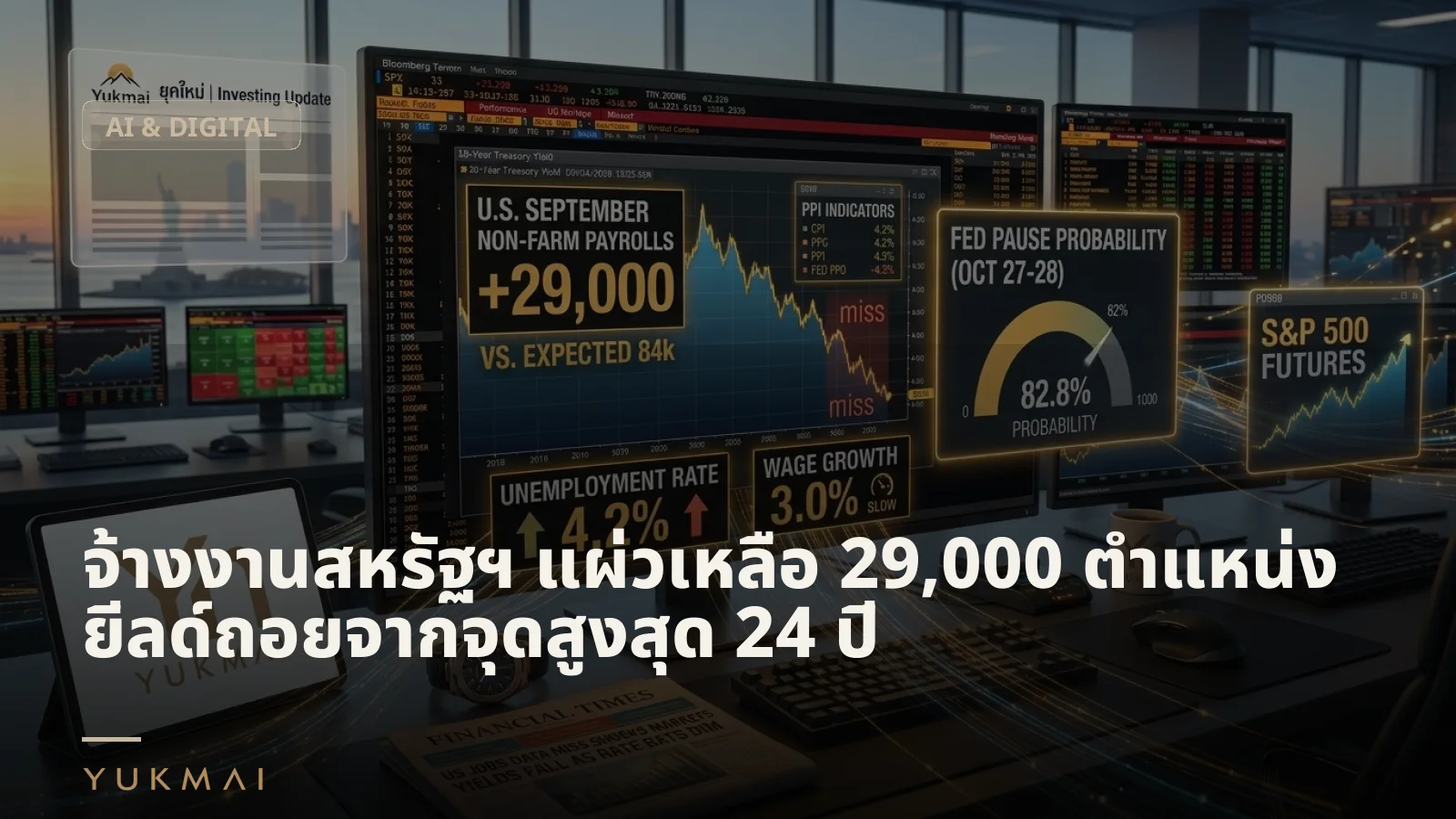
The number markets were waiting for is out, and it came in far weaker than expected. The Bureau of Labor Statistics reported that nonfarm payrolls rose just 29,000 in September, less than a third of the 84,000 forecast in a Dow Jones survey. The unemployment rate edged up to 4.2% from an expected 4.1%, and wage growth slowed to its weakest pace in more than five years. The report came just a day after the 10-year Treasury yield touched 5.34% on Oct. 1, its highest level in 24 years, or since 2002, and it triggered a reversal: bonds rallied, yields, the dollar and oil fell, and US stocks moved higher as investors concluded the Fed is likely to hold rates at its meeting later this month.
September Payrolls Rise Just 29,000
Beyond the weak September figure, earlier months were revised lower. August was cut from 162,000 to 133,000, and July flipped from a gain to a loss of 10,000, removing a combined 60,000 jobs from previously reported totals and leaving the three-month average at roughly 50,000 a month. Jefferies economists said August's surge now looks like nothing more than a rebound from very weak hiring in June and July. By sector, gains were concentrated in healthcare at 17,000, well below its 12-month monthly average of about 33,000, construction at 11,000 and manufacturing at 9,000. Government employment fell by 17,000, temporary help services by 11,000 and financial activities by 7,000.
AI's Impact on Jobs Is Showing Up, but the Picture Is Mixed
Information services lost 10,000 jobs amid concerns about the effect of artificial intelligence on employment. Bill Adams, chief US economist at Fifth Third Commercial Bank, said the evidence on AI's impact remains mixed: employment is falling in industries that are aggressively adopting AI, while demand for the technical workers who build and run AI systems is rising. That suggests AI is reshaping the mix of jobs more than reducing overall employment, at least for now.
Wage Growth Slowest Since 2021, but Household Data Is Stronger
Just as important as the headline number was average hourly earnings, which rose only 0.1% from August and 3% from a year earlier, the slowest annual pace since May 2021 and below forecasts of 0.3% and 3.1%. That eases worries about wage-driven inflation, though for consumers it means pay gains are being largely wiped out by rising prices. The rise in unemployment to 4.2% mostly reflected more people returning to the workforce, with participation climbing to 61.8%, its highest since May. The household survey showed employment up 406,000, and the broader U-6 unemployment rate, which includes those working part time for economic reasons, fell to 7.6%, its lowest since January 2025. The overall picture is a low-hire, low-fire labor market rather than one in decline.
Yields Retreat From a 24-Year High as Markets Bet on an October Hold
As soon as the report hit, Treasury yields fell back from levels not seen since the early 2000s, the dollar and oil eased, and US stocks rose. CME Group's FedWatch tool showed an 82.8% chance the Fed holds rates at its Oct. 27-28 meeting, and Jefferies chief US economist Thomas Simons said the data should effectively rule out an October hike. Not everyone agrees. Fifth Third's Adams said the mediocre report is not weak enough to shift the Fed's focus away from inflation and that the October decision remains live. Markets also still see a possible hike in December from a Fed that raised rates by a quarter point in September, with core inflation running near 3%, well above its 2% target.
What It Means for Investors: Yields Ease, but CPI, PPI and the Middle East Loom
For investors, the weak report gives breathing room to growth and technology stocks that had been pressured by high yields, as well as to bonds after a heavy selloff. It is still too early to call a peak in yields, because much of the pressure on bonds is structural and will not be fixed by one jobs report: US federal debt has topped $40 trillion for the first time, the defense budget has reached $1 trillion, tech companies have issued more than $400 billion in bonds this year to fund AI investment, and Japan may be selling US Treasuries to support the yen. More than half of respondents to Bloomberg's Markets Pulse survey still expect the 30-year yield to hit 6% by year end. The broader economy also remains strong, with the Atlanta Fed tracking third-quarter GDP growth at 3.7%, and energy risks are rising after President Donald Trump sent 9,000 US troops to the Middle East and warned that new strikes on Iran could follow. The next hurdles are September CPI on Oct. 14 and PPI on Oct. 15, ahead of the Fed's Oct. 27-28 meeting. Cooler inflation in line with the slowdown in wages would make a Fed hold more likely, but a spike in oil prices from Middle East tensions could bring pressure on yields and stocks right back. The October jobs report is due on Nov. 6.